
How to clean a kettle naturally: Use vinegar, lemon or bicarb

Keep your kettle clean, well-maintained and free from limescale with organic ingredients you already have in your kitchen.
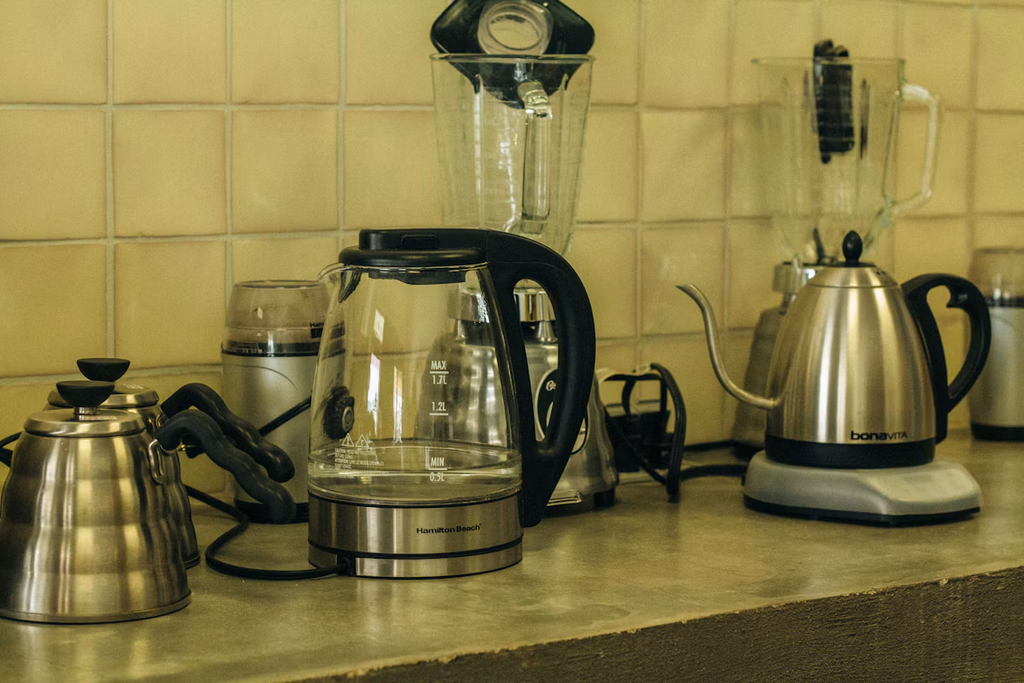
Image by Adolfo Félix on Unsplash
Trust us, it wouldn’t be an overstatement to assert that a kettle is among the most common home appliances across Australia. Furthermore, it’s one of those must-haves people use daily — meaning it works really hard throughout the day, every single week.
Over time, mineral deposits build up within kettles, causing limescale that can affect the taste of your boiled water. Does this warrant a new kettle every few months? Of course not! But your kettle does require proper cleaning and regular maintenance to ensure it performs at an optimum level all year round.
Learn how to descale a kettle naturally, using everyday ingredients that are readily available within your home.
Key Takeaways
- Limescale build-up is a natural occurrence and doesn’t warrant buying a new kettle every few months.
- You can clean and maintain a spotless kettle with natural kitchen ingredients that are readily available in the home.
- The vinegar, lemon and bicarb methods are the most popular techniques, producing quick, easy and effective results every time.
- For a kettle you use daily, expect to clean and descale it at least 2-4 times a month.
- Regular kettle cleaning ensures great tasting water for hot beverages and cooking.
- Descaling your kettle monthly supports optimal functioning while prolonging the lifespan for your appliance.
What is limescale?
Limescale is the white or off-white chalky/powder-like residue that builds up in stain formations on the sides and at the bottom of your kettle. It’s caused by high concentrations of magnesium and calcium (mineral deposits) which are left behind when you boil hard water.
Can limescale be avoided? Is it dangerous?
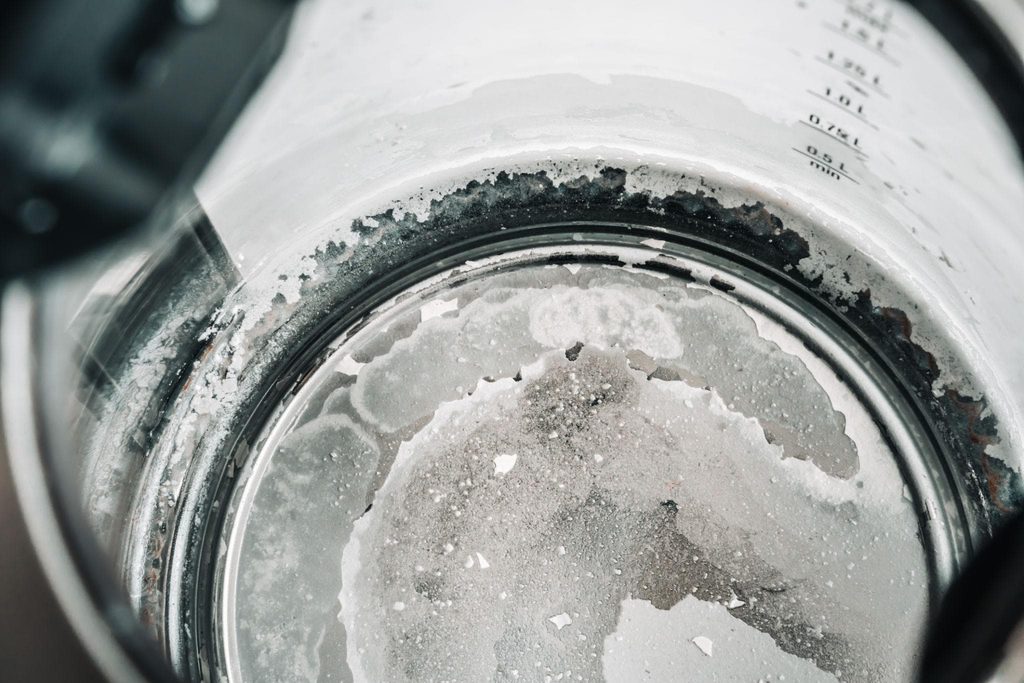
Unfortunately, limescale can’t be avoided — especially if you live in an area with a hard water supply. Limescale buildup in household appliances like kettles is a rather low-stakes, natural occurrence that’s easy to manage.
Luckily, limescale isn’t dangerous or harmful to consume — only unpleasant to the taste. Cleaning your kettle regularly is a winning way to keep limescale away and uphold the taste of your boiled water for all your cooking and hot beverage needs.
How to descale a kettle with vinegar
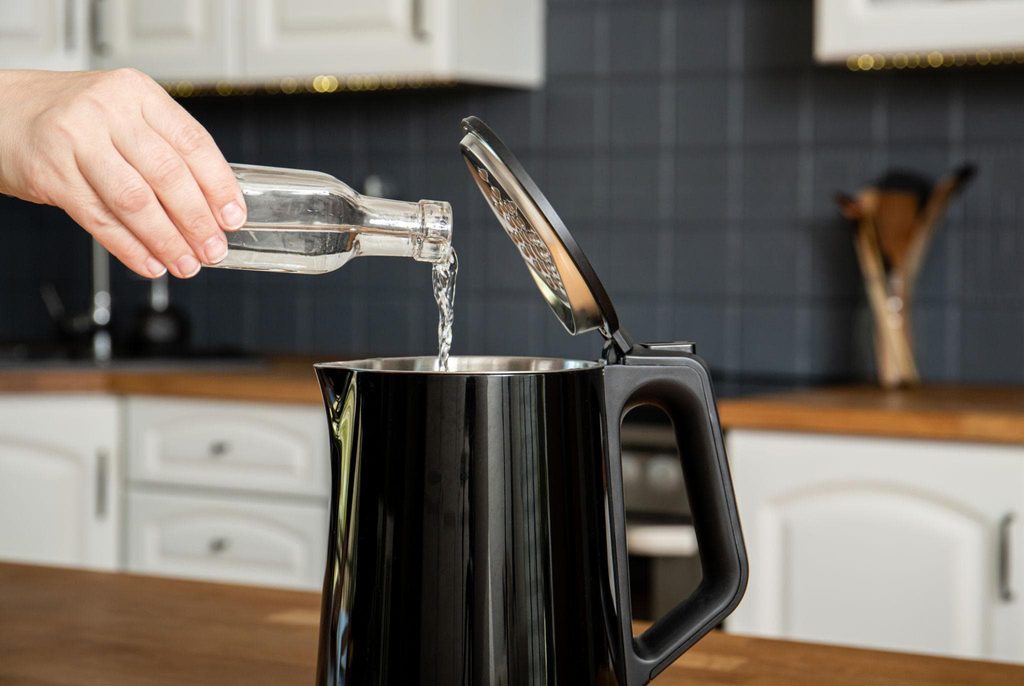
The first kitchen ingredient that does a stellar descaling job is white vinegar.
Why the vinegar method kicks some serious butt: White vinegar is strong, fast-acting and safe to use.
Quantity: 1 cup of water + 1 cup of white vinegar (Ratio = 1:1)
Method:
- Pour 1 cup of cold water plus 1 cup of white vinegar into your kettle.
- Bring your kettle to a full boil.
- Let the mixture sit for 5-10 minutes if you’re in no rush to use boiled water for any particular purpose. With more time at your disposal, you can leave the mixture to sit for up to one hour.
- Empty the kettle, then rinse it properly with cold water (three times). You’ll notice all the limescale residue is completely gone.
- Boil two fresh rounds of water, discarding each one to thoroughly remove the lingering vinegar taste.
- By your third fresh boil, you’re ready to enjoy a delicious cuppa or use boiled water for cooking purposes.
How to descale a kettle with lemon
Next on the natural descaling remedy list is good old lemon.
Why the lemon method is something to write home about: This gentle method freshens and deodorises as it works.

Quantity: 1 ½ cups of water + ½ a cup of lemon juice (Ratio = 3:1)
OR
1 ½ cups of water + the slices of 2 whole lemons
Method:
- Pour 1 ½ cups of cold water plus ½ a cup of lemon juice into your kettle. Alternatively, you can substitute the lemon juice with thin slices of 2 whole lemons.
- If you have heavy limescale build-up, ensure that you’ve filled your kettle to the level just above the affected areas.
- Bring your water and lemon mixture to a full boil.
- As with the vinegar method, let the mixture sit for 5-10 minutes if you need to use the kettle immediately after cleaning. Where there’s no rush, let the mixture sit for longer.
- Discard the water and lemon mixture, then refill the kettle with fresh water. Boil and leave it to sit for 30 minutes; refill and repeat.
- Before boiling a fresh, drinkable round, rinse your kettle one more time with cold water.
- You’ll be pleased to observe that the limescale stains have vanished, leaving you with a freshly cleaned and beautifully smelling kettle for normal use.
How to descale a kettle with bicarb
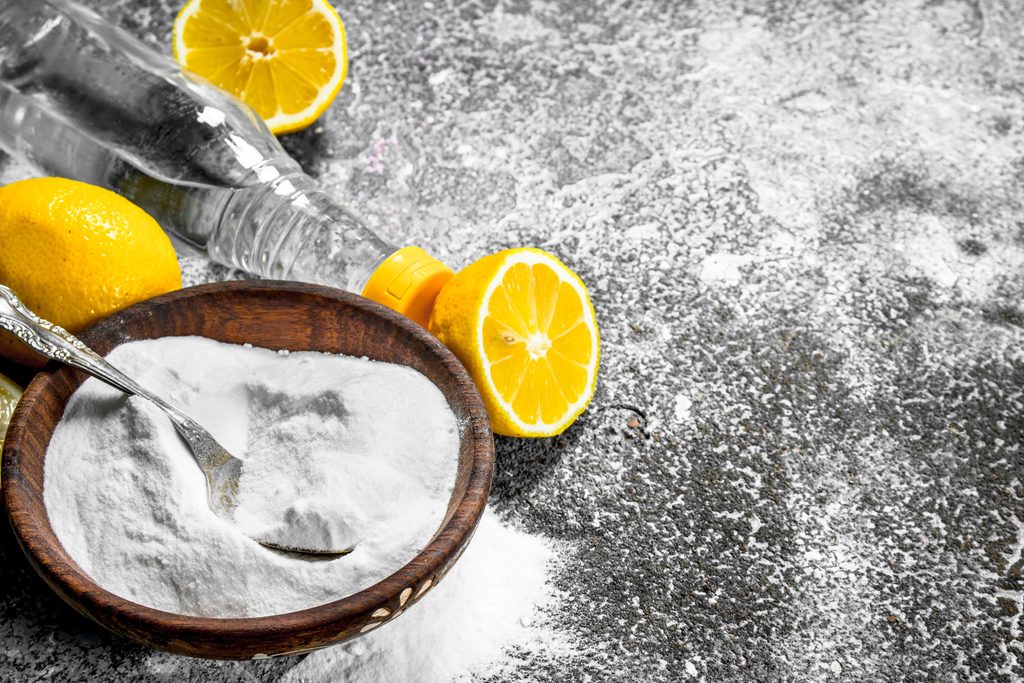
Everyone’s favourite multi-purpose super ingredient also makes it onto this descaling list: it’s the mighty bicarbonate of soda (also known as baking soda).
Why the bicarb method comes highly recommended: Bicarb is a safe, affordable household staple that’s always readily available (it also works for many other cleaning hacks).
Quantity: 2 cups of water + 1-2 tablespoons of bicarbonate of soda — depending on how heavy the limescale build-up is (Ratio = 2:1 OR 2:2)
Method:
- Pour 2 cups of cold water plus 1-2 tablespoons of bicarb into your kettle.
- Bring the kettle to a full boil two times, with a 5-minute gap in between.
- Allow the water and bicarb mixture to sit for 10-15 minutes.
- Discard the mixture and rinse the kettle with cold water. Boil one round of fresh water and discard. Afterwards, you’ll notice the inside of your kettle is free from any major limescale build-up.
- Should minor limescale traces remain, dry and wipe down the inside of the kettle with a sponge or soft cloth to remove stubborn residue.
- Refill your kettle and boil a fresh round of water to enjoy using your kettle as normal.
How to descale an electric kettle: Similarities worth knowing
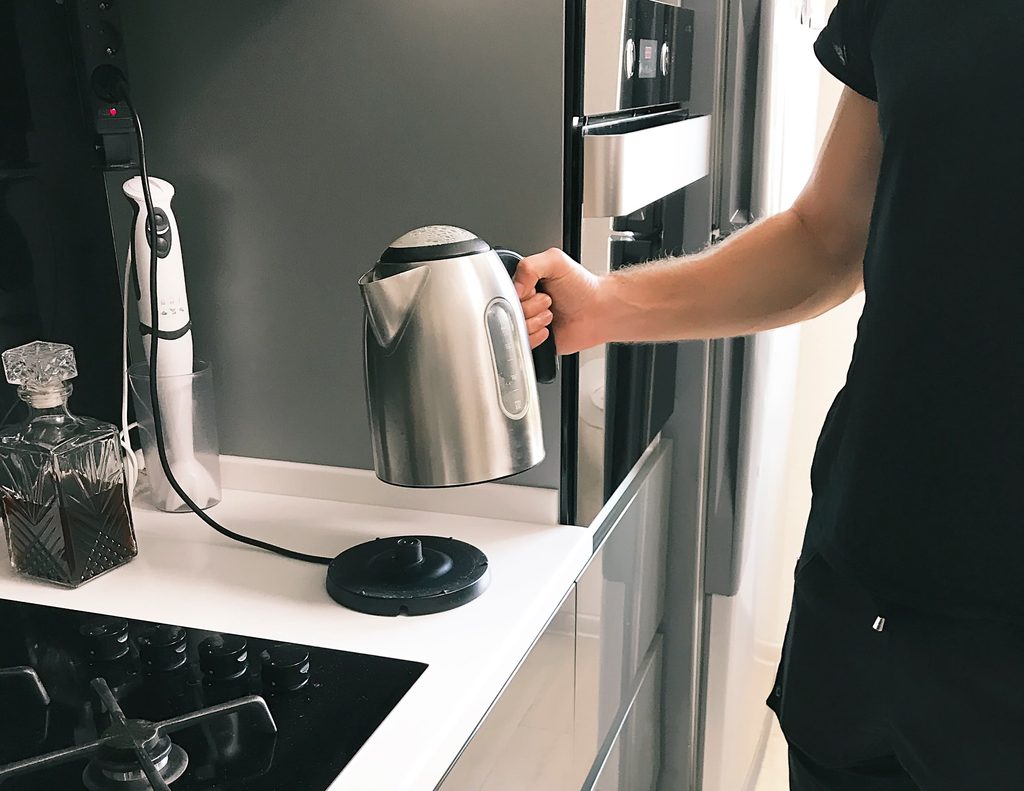
The vinegar, lemon and bicarbonate of soda methods work marvellously for electric kettles, stovetop kettles and many other types.
Just remember, as with all electric appliances, never submerge your electric kettle in water. When in doubt, always re-read the instruction manual and pay close attention to the appliance’s unique safety precautions to prevent any damage, accidents or hazards.
How to descale a glass kettle: Notes worth keeping
You’ll be happy to know there’s no surprise here; you can clean and descale glass kettles just as you would electric, stovetop and other kettle types.
Work steadily as you clean, with delicate movements throughout the descaling process. You may need to apply a gentle scrub to remove unyielding limescale stains. But remain patient and take your time to prevent any hurried actions that may lead to damage.
General notes: Ensure the best results when descaling your kettle
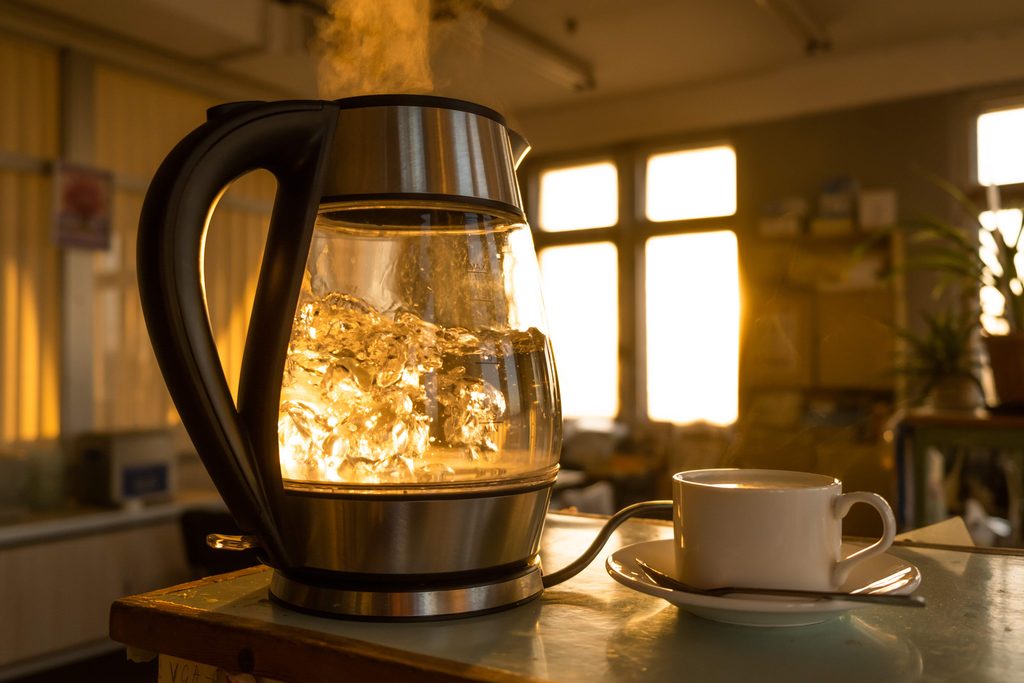
Follow these simple notes for the best results each time you clean and descale your kettle:
- You may need to repeat the descaling process for heavy limescale build-up and stubborn stains. Otherwise, let your mixture sit for a longer period before discarding and rinsing.
- For a stronger boost of cleaning power, consider carefully mixing white vinegar with bicarb (in appropriate amounts). This will loosen up and dissolve the limescale much quicker, albeit requiring more rounds of thorough rinsing to rid your kettle of the lingering aftertaste.
- Avoid using harsh commercial products, scrubbers or abrasive household cleaning agents when descaling your kettle. This may damage or scratch the heating element and other sensitive kettle parts.
- There may be unique kettle material considerations to make (plastic vs. stainless steel vs. glass) before you start. Check your appliance’s safety precautions and consult the instruction manual when unsure.
- Place removable kettle filters in a diluted hot cleaning solution to remove any mineral deposits that get trapped in this component over time. A quick but gentle toothbrush scrub also does the trick.
- Try not to constantly overfill your kettle beyond the amount of boiled water you actually need.
- Avoid leaving kettle water standing for long periods of time as this also contributes to limescale build-up.
FAQs: Descaling your kettle the natural way
You can never have too much useful information when you’re tackling a DIY task at home. Read these commonly asked questions and answers to ensure your kettle cleaning hits the mark every time.
What does limescale look like in a kettle?
You can identify limescale inside your kettle by looking for a white, chalky residue that usually creates stains on the sides or at the bottom of the appliance. When left to accumulate over long time periods, thus really heavy in appearance, the powder-like residue can peel off and float visibly in your hot beverages in the form of small flakes.
What causes limescale?
Limescale is caused by natural mineral deposits left behind in the kettle when you boil hard water. Build-up increases and the residue/stains get thicker with each boil when you don’t clean your kettle regularly enough.
Why do I have to descale my kettle?
It’s imperative to descale your kettle regularly for the following reasons:
Appearance: Although limescale isn’t harmful to consume, it’s a bit of an eye-sore, right? When there’s a heavy build-up, your kettle will look dirty, grimy and untidy. Preserve a sharp, clean, crisp look to your appliance by keeping it clean and pristine.
Taste: Perhaps the most tangible drawback, limescale often causes an unpleasant aftertaste to boiled water. A clean, descaled kettle is the way to go for delicious cuppas and cooking outputs that haven’t been compromised in the slightest by limescale residue.
Function and efficiency: Limescale can reduce the efficiency and function of your kettle. You’ll know this is the case when the water takes longer to heat up, thereby consuming more energy.
Lifespan and damage: When extremely heavy limescale deposits have taken over your kettle, it can cause the heating element to corrode — shortening the appliance’s lifespan and costing you more replacement money in the long-term. In extreme domestic use cases, there have been reports of overheated kettles and complete malfunction.
Does it matter what vinegar I use to descale my kettle?
Yes, it does matter what kind of vinegar you use. White vinegar is best to use for kettle cleaning and descaling. It’s strong enough to remove build-up deposits and stains while also remaining mild enough to not cause any damage.
Does Coca-Cola work for descaling a kettle?
Yes, some people like to use Coca-Cola for cleaning their kettles — thanks to the phosphoric acid content that has been shown to effectively remove limescale traces.
We recommend staying away from any commercial products or chemicals that aren’t natural or organic.
Can I avoid descaling my kettle altogether?
No, you can’t avoid descaling your kettle altogether. Limescale is a natural occurrence and is most certainly guaranteed in households located in areas with a hard water supply.
Reduce the amount of times you might need to descale your kettle monthly by using filtered water; it contains lower levels of mineral deposits.
Looking for kitchenware?
Browse the full collection of kitchenware from Beyond Home, from coffee grinders to milk frothers to tea pots and so much more!